
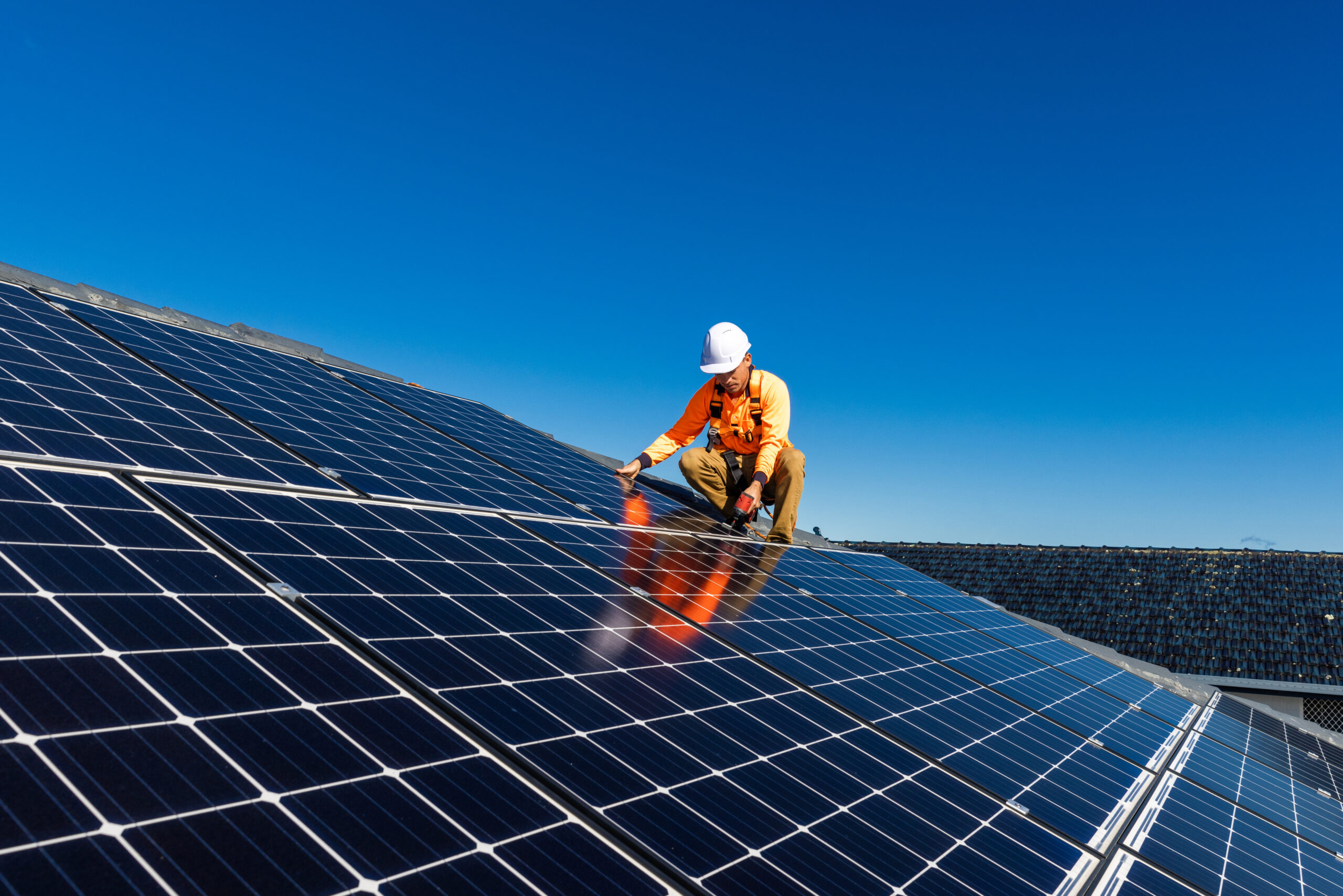
The 30 percent federal residential solar tax credit is gone. If your installation was completed on or after January 1, 2026, there is no Section 25D credit to claim, no partial credit, and no grace period for a deposit you paid in 2025.
That single change rewrites the payback math on almost every solar proposal written before mid-2025, and a lot of what is still published online has not caught up. This guide resets expectations honestly for cash buyers, financed buyers, and homeowners considering a lease or power purchase agreement, using what the statute and the tariffs actually say as of September 2026. At Sunlight Electri-Cal Solutions, we would rather have a harder conversation up front than hand someone a savings estimate built on a credit that no longer exists.
The short answer for 2026
- Federal residential tax credit (Section 25D): terminated. No credit for expenditures made after December 31, 2025.
- Unused 2025 credit: still usable. If you claimed the credit on a 2025 system and could not absorb all of it, the leftover carries forward.
- California state solar tax credit: there is none. California has never offered a residential solar income tax credit, and no new one was created for 2026.
- Export credits: still here, but modest. Systems interconnecting now go on the Net Billing Tariff, where exported power is credited at hourly avoided cost values.
- Battery rebates: partly available, partly waitlisted. The Self-Generation Incentive Program still exists, though its income-qualified residential budget is closed to new reservations and is running a waitlist.
- Third-party ownership: different rules, and still credit-eligible. The commercial credit that lease and PPA providers use was not repealed for solar photovoltaics, which is why those offers still exist while the homeowner credit does not.
If you take nothing else from this page, take this: in 2026, the honest case for solar in the Bay Area rests on avoided utility cost, not on a tax credit. Any proposal that still shows a 30 percent federal credit line is either stale or wrong.
What actually happened to the 30 percent credit
The Residential Clean Energy Credit lived in Section 25D of the Internal Revenue Code. Public Law 119-21, enacted July 4, 2025, moved its termination date up by nine years. The statute now reads:
“The credit allowed under this section shall not apply with respect to any expenditures made after December 31, 2025.”
The word doing the work there is expenditures, not “placed in service.” Section 25D(e)(8)(A) defines when an expenditure is treated as made:
“Except as provided in subparagraph (B), an expenditure with respect to an item shall be treated as made when the original installation of the item is completed.”
So the deadline was tied to completion of installation, not to when you signed, paid, or received permission to operate.
The paid-in-2025, finished-in-2026 trap
This is the question we field most often, and the IRS answered it directly in fact sheet FS-2025-05, published August 21, 2025. Asked whether a taxpayer who paid in 2025 for a system installed in 2026 can claim the credit, the IRS said:
“No. Section 25D(e)(8)(A) provides that an expenditure with respect to an item is treated as made when the original installation of the item is completed. If installation is completed after December 31, 2025, the expenditure will be treated as made after December 31, 2025, which will prevent the taxpayer from claiming the Section 25D credit.”
A deposit, a signed contract, a paid-in-full invoice, and an ordered pallet of modules are all irrelevant. If the install wrapped up in 2026, the credit is not available. Homeowners who were told otherwise by a salesperson in late 2025 should talk to a tax professional rather than assume.
If you finished in 2025, you may still have credit left
Here is the part that gets almost no coverage, and it is worth real money to some households. The termination did not repeal Section 25D(c), the carryforward provision. If your 2025 credit exceeded your 2025 tax liability, the excess carries to the next year and can keep carrying.
The IRS has confirmed this administratively. The draft 2026 instructions for Form 5695, posted September 1, 2026, retitle the form “Carryforward of Residential Energy Credit” and state that you use it “to take any residential clean energy credit carryforward from 2025 or to carry the unused portion of the residential clean energy credit to 2027.”
Practically, that means a homeowner who installed in late 2025 with a large credit and a modest tax bill is not out of luck. File, track the carryforward, and keep claiming it until it is used. Ask your preparer specifically about line 16 of your prior-year Form 5695.
A warning about what you will read elsewhere
Be careful with secondary sources on this topic right now, including some government pages. As of this writing, the IRS’s own consumer-facing Residential Clean Energy Credit page still contains leftover language describing a credit that “begins to phase out in 2033,” and it describes the cutoff as applying to property “placed in service” after December 31, 2025, which is not the statutory test. The Department of Energy’s homeowner guide to the solar tax credit has not been substantively updated since April 2024 and still refers to eligibility running through 2034.
Those pages are not malicious; they are just stale. The reliable sources are the statute itself, fact sheet FS-2025-05, and the Form 5695 instructions.
What is left for a cash buyer in the Bay Area
Strip out the federal credit and the case for solar becomes a straightforward utility arithmetic problem. Three things drive it.
1. The value of the power you use yourself
Every kilowatt-hour your system produces that your home consumes on the spot offsets a retail kilowatt-hour you would otherwise buy. In PG&E territory, that is by far the largest economic benefit of a residential system, and it is the number that has held up best through every tariff change.
2. The value of the power you export, which is much lower
Systems interconnecting today go on the Net Billing Tariff, adopted in CPUC Decision 22-12-056 on December 15, 2022, and effective April 15, 2023. Exports are credited using hourly avoided cost values that vary by month, hour, weekday, and weekend, rather than at the retail rate. Residential customers applying through December 31, 2027 get a nine-year locked-in schedule of those values, fixed as of January 1 of the year their interconnection application is completed.
There is also a temporary residential adder that steps down every year. For 2026 interconnections, it is $0.0088 per kilowatt-hour, falling to $0.0044 in 2027 and then to zero. That is a real but small number, and it is one more reason the economics now favor using your own production rather than selling it. We cover the mechanics of export pricing in detail in our breakdown of how NEM 3.0 changes the value of exported power, so we will not repeat them here.
One thing worth stating plainly: as of April 14, 2026, the window to complete a NEM 2.0 system closed. PG&E’s rule was that applications submitted before April 15, 2023 had to be finished before April 15, 2026, and interconnection customers who had not submitted a final electrical clearance by 11:59 p.m. on April 14, 2026 move to the Solar Billing Plan. There is no remaining path onto NEM 2.0 in PG&E territory.
3. A rate structure change that most 2026 payback estimates ignore
On March 1, 2026, PG&E restructured residential bills to add a Base Services Charge, a fixed daily charge per customer, offset by lower per-kilowatt-hour rates. Per PG&E’s Schedule E-1, the charge is $0.79343 per day for standard income-tier customers, roughly $24.13 a month, with lower amounts for CARE and FERA participants. PG&E states the plainly relevant part on its own site: “Solar customers, even though they are producing clean energy, still use the electric grid, and therefore pay the same Base Services Charge as non-solar customers.”
This matters for payback in a way that is easy to miss. Because the restructuring shifts revenue from volumetric rates to a fixed charge, each kilowatt-hour you avoid buying is worth slightly less than it was before March 2026. Average residential rates did come down over the same period, from about 44.36 cents per kilowatt-hour in late 2025 to 41.46 cents on January 1, 2026, and 40.60 cents on March 1, 2026.
A proposal that models your savings using a 2024 or 2025 rate, and that does not account for a fixed charge you cannot solar your way out of, will overstate your return. When you read a solar proposal, the rate assumption and the escalator are the two inputs that deserve the most scrutiny.
What is left for a financed buyer
The tax credit was always a credit against tax owed, never a rebate and never cash at closing. That distinction is now critical, because a large share of solar loans written between 2023 and 2025 were structured around it.
The common pattern was a loan with two components: a smaller “credit portion” the borrower was expected to pay down as a lump sum after claiming the 30 percent credit, and a larger amortizing portion. If the lump sum was not paid within the window, the payment reset upward, sometimes sharply.
If you are being offered financing in 2026, ask these questions and get the answers in writing:
- Does the payment schedule assume any lump-sum paydown at any point? If yes, from what source?
- What is the payment before and after any step-up, and on what date does the step-up occur?
- What is the dealer fee or origination cost embedded in the system price, and what is the cash price of the same system?
- Is the interest rate fixed for the full term?
A financed system in 2026 should be quoted against a cash price so you can see what the financing actually costs. If a lender’s payment schedule still assumes a 30 percent buydown, that schedule was built for a world that ended on December 31, 2025.
Why lease and PPA offers still exist, and what is actually different about them
Homeowners often assume that if the residential credit died, third-party ownership must have died with it. The opposite is closer to the truth, and the reason is a detail in the statute that is widely misreported.
When a lease or PPA provider owns the system on your roof, the homeowner claims nothing. Section 25D always required ownership, so a leasing customer never had access to the residential credit in the first place. The provider claims a commercial credit instead, now under Section 48E.
Public Law 119-21 did add a denial provision for leasing, Section 48E(i), titled “Denial of credit for expenditures for wind and solar leasing arrangements.” Read carefully, it applies to property described in “paragraph (1) or (4) of section 25D(d).” Those two paragraphs are solar water heating property and small wind property. Solar electric property, meaning rooftop photovoltaics, sits in paragraph (2) and is not in that list.
The practical result: third-party-owned residential rooftop solar was not cut off from the commercial credit. That is why these offers are still on the market in 2026 while the homeowner credit is gone.
Two genuinely new pressures do apply to the providers, and they are worth understanding because they affect availability and pricing rather than your tax return:
- A construction deadline has passed. Under the amended Section 48E, solar facilities that did not begin construction on or before July 4, 2026 must be placed in service by December 31, 2027 to qualify. Projects that began construction before that date are not subject to the 2027 placed-in-service cutoff.
- Foreign-entity sourcing rules are now live, without full guidance. For property whose construction begins after December 31, 2025, the credit is unavailable if the project received “material assistance from a prohibited foreign entity.” Treasury is required to issue safe harbor tables identifying cost percentages by December 31, 2026, and as of early September 2026 those tables had not been published.
None of that is your compliance problem as a homeowner, but it does mean a provider’s pricing and timeline promises in 2026 deserve more scrutiny than they did two years ago. If you are weighing third-party ownership, our explainer on the prepaid solar PPA structure walks through how those agreements are actually priced.
Comparing the three ways to pay in 2026
| Cash purchase | Loan purchase | Lease or PPA | |
| Who owns the system | You | You | The provider |
| Federal tax credit to you | None in 2026 | None in 2026 | None, and never was |
| Who claims a federal credit | Nobody | Nobody | The provider, under Section 48E |
| Main economic driver | Avoided utility cost | Avoided utility cost, minus financing cost | Contract rate versus utility rate |
| Biggest thing to verify | Rate and escalator assumptions in the payback model | Any assumed lump-sum paydown and payment step-up | Escalator, term, transfer terms on home sale |
| Effect on the home sale | Owned asset, no assignment needed | Lien or UCC filing to clear | Agreement must be assigned or bought out |
What California still offers
Battery storage rebates through SGIP. The Self-Generation Incentive Program remains the main state-administered incentive relevant to residential customers, and it is aimed at storage rather than panels. As of September 4, 2026, PG&E’s program page lists the Residential Solar and Storage Equity rebate for income-qualified customers as closed, with contractors able to add customers to a waitlist and PG&E stating it will notify waitlisted customers “when this rebate program has more funds.” Other categories, including the General Market residential rebate and Equity Resiliency, are presented as available. Published incentive levels have changed repeatedly and differ between CPUC pages and the program handbook, so treat any specific dollar figure you read online, including on this page, as something to confirm against the live program dashboard before you count on it.
One SGIP condition is easy to miss and expensive to get wrong: taking an SGIP rebate can move a legacy net metering customer onto the current tariff. If you already have solar under NEM 1.0 or NEM 2.0, read our companion post on protecting legacy status before you accept a storage rebate.
No state income tax credit. California does not offer a residential solar income tax credit, and did not add one for 2026. Any page telling you otherwise is confusing the former federal credit with a state benefit.
For a current list of what we see actually applying to Bay Area projects, our current solar incentives page is kept closer to real time than a blog post can be.
So is solar still worth it in the Bay Area without the credit?
For many Dublin, Pleasanton, Livermore, and Tri-Valley homes, yes, but the answer now depends much more on your specific usage than it used to.
Solar makes the strongest financial case when:
- Your annual electricity use is high, particularly if you have air conditioning, a heat pump, a pool pump, or an EV.
- A large share of your consumption happens during daylight hours, or you add storage so that it effectively does.
- Your roof has usable south- or west-facing area with limited shading.
- You plan to stay in the home long enough to pass the payback point.
It makes a weaker case when your usage is low, your roof is small, heavily shaded, or nearing replacement, or you expect to move within a few years.
Storage changes the picture more than it used to, because the value now sits in self-consumption rather than export. That is a different calculation than it was under NEM 2.0, and it is the main reason home battery backup has moved from a nice-to-have to a central part of most designs we build. If your roof is within a few years of replacement, sort the roof out first, because removing and reinstalling an array later is the most avoidable cost in residential solar.
Frequently asked questions
Not for homeowners who buy their own system. The Section 25D residential credit does not apply to expenditures made after December 31, 2025, and an expenditure is treated as made when the original installation is completed. A separate commercial credit under Section 48E still exists and is used by lease and PPA providers, not by homeowners.
Its termination date was moved up. Public Law 119-21, enacted July 4, 2025, changed the expiration from the end of 2034 to the end of 2025. The credit was not retroactively cancelled, so systems whose installation was completed in 2025 or earlier are unaffected.
No. The IRS addressed this directly in fact sheet FS-2025-05: if installation is completed after December 31, 2025, the expenditure is treated as made after that date and the credit cannot be claimed. Speak with a tax professional about your specific situation.
No. The carryforward provision in Section 25D(c) was not repealed. The draft 2026 Form 5695 instructions confirm you can carry an unused 2025 credit into 2026 and then into 2027. Keep your prior-year Form 5695 and give it to your preparer.
Not for panels themselves in most cases. California’s active residential incentive is SGIP, which targets battery storage, and its income-qualified residential budget was closed with a waitlist as of September 2026. There is no California residential solar income tax credit.
For many homes, yes, though the reason has shifted. Because exported power is credited at hourly avoided cost values rather than retail rates, storing your production for evening use is now worth more than selling it. Backup during outages is a separate benefit that does not depend on any incentive.
Nobody can tell you that honestly. It would take an act of Congress, and we do not make plans or proposals based on speculation about future legislation.
Getting a straight answer on your own numbers
The only payback figure worth anything is one built on your actual usage, your actual rate schedule, your actual roof, and today’s tariff rules. That is not something a calculator can do well, and it is not something we are willing to estimate loosely.
If you want an honest read on whether solar pencils out for your home in 2026, including the cases where we answer that it does not, contact our team and we will walk through your PG&E usage history with you. If your roof is the open question, we handle solar panel installation and roofing under one roof, which means nobody gets to blame the other trade later.
A note on sources and timing: incentive programs and tariffs change on their own schedules. Every figure above reflects the statute, IRS guidance, CPUC decisions, and PG&E tariffs as published in early September 2026. Before making a financial commitment, confirm current terms with the IRS, the CPUC, PG&E, and a licensed tax professional.
Sunlight Electri-Cal Solutions is a licensed contractor serving the East Bay and greater Bay Area. CSLB #1055220. This article is general information, not tax or legal advice.