
How to compare solar quotes without getting buried in jargon
If you’re collecting bids for solar in Dublin, CA (or nearby Pleasanton, Livermore, San Ramon, Danville, Walnut Creek, Castro Valley, Hayward, and San Jose), you’ll notice that proposals can look “similar” on the surface—until you compare what actually matters: system design quality, real-world production assumptions, electrical readiness, battery strategy, and who’s accountable after install. This guide is built for homeowners who want energy independence and predictable household energy costs—especially as utility pricing and outages remain a concern across Northern California. PG&E has announced recent rate decreases and forecasts additional changes in 2026, but household bills still swing with usage, seasons, and future adjustments, which is why many homeowners focus on reducing dependence on retail electricity in the first place.
Start with the goal: “cheaper panels” vs. “independent power”
Many proposals are optimized for the lowest upfront price, not the best long-term outcome. Before comparing line items, decide what you want your system to do:
For 2026 and beyond, the highest-value designs in the Bay Area are typically those that:
(1) reduce high-priced grid usage during peak hours,
(2) keep critical loads running during outages, and
(3) are designed around your home’s electrical realities (panels, service size, load).
Recent storms and equipment incidents have driven outages across Northern California, reinforcing why backup capability matters for many families.
The 9-point solar proposal comparison checklist (Bay Area edition)
1) Apples-to-apples system size (kW) and estimated annual production (kWh)
Two proposals can both be “8 kW,” yet estimate very different yearly production. Ask each contractor to provide: system size (kW DC), inverter strategy, annual kWh estimate, and the assumptions behind shading and roof orientation.
2) Panel model + inverter model (not just “Tier 1”)
Get exact equipment names. Then compare practical items that affect long-term results: power rating, temperature coefficient, product warranty, and inverter warranty term. If one proposal is vague, treat that as a risk signal.
3) Roof layout quality (setbacks, vents, future reroof access)
A clean layout isn’t just aesthetics. It impacts fire/code compliance, serviceability, and the ability to remove/reinstall modules later if your roof needs work. Ask for the plan view and confirm the contractor will handle roof-penetration flashing details correctly.
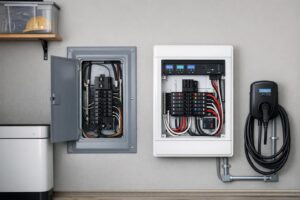
4) Electrical scope clarity: main panel, sub-panel, and load calculations
In the Bay Area, many “solar-only” bids under-scope electrical work—then change orders appear later. Your comparison should explicitly answer: Is a main panel upgrade required? Is a sub-panel needed? How will backfeed limits be addressed?
If your home is also planning for an EV or heat pump later, designing for that now can prevent rework. Explore: main panel upgrades and sub-panel upgrades.
5) Battery strategy (if you want true independence)
In many modern Bay Area designs, a battery isn’t “optional fluff”—it’s how you keep your solar useful after sunset and during outages, and how you reduce reliance on peak-priced grid power. Compare proposals on: usable kWh, continuous/peak kW output, backup vs. whole-home behavior, and whether critical loads are thoughtfully selected.
Explore: home battery backup solutions.
6) EV charger readiness (even if you don’t own an EV yet)
If you expect an EV in the next 1–3 years, confirm the proposal addresses load capacity and conduit planning. A clean install often means fewer drywall cuts, better breaker planning, and easier scheduling later.
Explore: EV charger installation.
7) Workmanship warranty and “who owns the problem” after install
Manufacturer warranties don’t replace a strong workmanship warranty. Compare: (a) workmanship term, (b) roof-penetration/leak coverage, (c) monitoring support, and (d) response times. A full-service contractor who does solar + electrical in-house reduces handoffs when troubleshooting.
8) Transparent pricing: what’s included vs. allowances
Ask whether the price includes permitting, utility paperwork, consumption monitoring, electrical upgrades, and any trenching/conduit work that could reasonably be anticipated. If the bid includes “allowances,” clarify what happens if the real scope exceeds them.
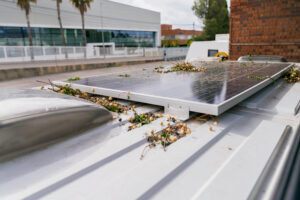
9) Service plan: maintaining and troubleshooting existing solar
If you already have solar, compare whether the contractor can diagnose inverter faults, combiner issues, monitoring dropouts, and production declines. That capability matters when your system becomes a core part of your home’s power plan.
Explore: servicing existing solar panels.
What to request from each bidder
| Proposal Item | What “Good” Looks Like | Red Flags |
| System design | Layout drawing, shading assumptions explained, realistic kWh | No layout, “best-case” numbers, vague modeling |
| Equipment list | Exact panel + inverter models, warranties stated in writing | “Tier 1 panel” only; model TBD |
| Electrical scope | Panel/backfeed plan spelled out; upgrades priced clearly | “We’ll see after inspection” without ranges |
| Battery/backup | Critical loads plan, usable kWh, runtime expectations | Battery offered without load discussion |
| Warranty & service | Workmanship + monitoring support + service process described | “Call the manufacturer” approach |
What Dublin-area homes should consider
In Dublin and the Tri-Valley, it’s common to see proposals that look great on paper but fail in execution because the home’s electrical infrastructure wasn’t addressed early. Here are “local realities” that often affect results:
Heat waves = higher summer usage (A/C demand can change your system sizing needs).
EV adoption is strong across the East Bay and South Bay (plan for a Level 2 charger circuit).
Outages happen, from storms to equipment incidents—backup planning is no longer “rare use.”
Long-term value is design-driven: the best “proposal” is the one that stays accurate after site survey, permitting, and final inspection.
If you’re comparing bids across Pleasanton, Livermore, San Ramon, Danville, Walnut Creek, Castro Valley, Hayward, or San Jose, use the same checklist above and insist on the same scope clarity. It’s the fastest way to spot a proposal that’s built for smooth permitting and long-term performance.
Why homeowners choose an in-house solar + electrical contractor
Solar doesn’t live in isolation—it connects to your main service equipment, sub-panels, load planning, EV charging, and sometimes batteries. When a single team owns the full scope, you typically get:
- Cleaner permitting path (fewer “handoff gaps” between trades)
- More accurate pricing (fewer surprise electrical add-ons)
- Simpler troubleshooting (one accountable point of contact)
Sunlight Electri-Cal Solutions is a Dublin-based full-service solar and electrical contractor that designs, installs, and services systems in-house—covering solar, batteries, EV chargers, and panel upgrades. Learn more about available options on the services page.
Want a second set of eyes on your solar proposals?
If you already have multiple quotes, we can help you compare them line-by-line: equipment, production assumptions, electrical scope, and whether the design supports real energy independence with backup capability.
Residential Solar InstallationBattery Backup EV Charger Installation
FAQ: Solar proposal comparison (Dublin & Bay Area)
How many solar quotes should I get?
Usually 2–4 is enough—more than that often creates noise. Focus on getting quotes that clearly state equipment models, electrical scope, and warranty/service details so you can compare fairly.
If PG&E rates can go down, does solar still make sense?
Many homeowners don’t go solar only because of a single year’s rate change—they do it to reduce long-term dependence on retail electricity and to keep key circuits running during outages. PG&E has reported multiple rate decreases since 2024 and additional changes expected in 2026, but energy independence is about control and resilience, not predicting utility decisions.
What’s the biggest “hidden cost” when comparing proposals?
Electrical upgrades and scope gaps (main panel limitations, sub-panel needs, trenching runs, or unexpected service modifications). Ask for a site survey and a clearly written scope before signing.
How do batteries change the value of solar in 2026?
Batteries can help you use more of your own solar energy after sunset and keep critical loads running during outages—two of the biggest drivers of “practical value” for Bay Area homeowners who want independence and predictability.
I already have solar—should I replace it or service it?
Start with diagnostics. Many systems can be improved with inverter replacement, wiring/combiner repairs, monitoring restoration, or selective upgrades. If you’re not getting expected production, a service visit can identify the bottleneck before you consider a full replacement.
Glossary: common solar proposal terms
kW (kilowatt)
A measure of solar system “size” or power capacity (how much power it can produce under standard conditions).
kWh (kilowatt-hour)
A measure of energy over time (what you actually use on your bill and what solar produces across hours/days).
Inverter
Converts solar panel DC power into AC power your home uses. Can be a string inverter, microinverters, or hybrid inverter (often used with batteries).
Main service panel (MSP)
Your home’s primary electrical panel. Its rating and busbar limits can affect how solar, batteries, and EV chargers can be safely integrated.
Critical loads
The circuits you choose to keep powered during an outage (often fridge, Wi‑Fi, lighting, select outlets, garage door, and sometimes HVAC depending on battery capacity).
Sunlight Electri-Cal Solutions proudly services Dublin, San Jose, Castro Valley, Fremont, Pleasanton, and surrounding communities throughout the region.