
A practical guide to capacity, control, and future-proofing your electrical system
Many homeowners around Dublin, California are upgrading their electrical systems for one (or all) of these reasons: adding solar, pairing a home battery backup, installing a Level 2 EV charger, or preparing for an all-electric home (heat pump HVAC, heat pump water heater, induction cooking). Two common options come up quickly: a sub panel upgrade or a smart panel upgrade (like a SPAN smart panel). Both can be excellent—when they’re chosen for the right job.
Sunlight Electri-Cal Solutions helps homeowners across Dublin and nearby cities like Pleasanton, Livermore, San Ramon, Danville, Castro Valley, Fremont, Hayward, and San Jose make the best-fit decision based on load calculations, panel capacity, solar + storage design, and how you actually live in your home.
First: What’s the difference?
A sub panel (aka subpanel)
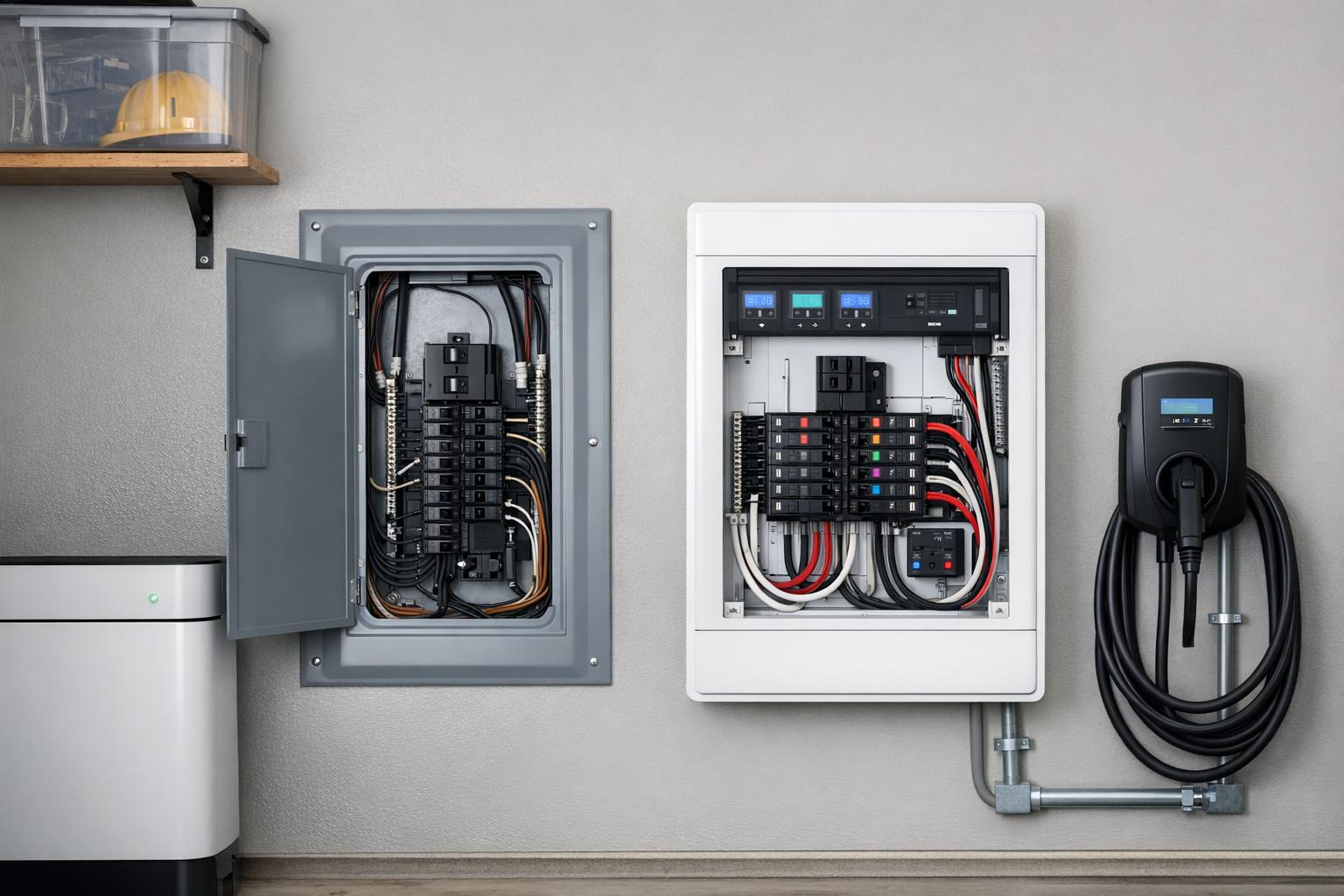
A sub panel is a secondary breaker panel fed from your main service panel. It’s commonly used to:
- Add breaker space when the main panel is full
- Organize loads (garage circuits, workshop, ADU, pool equipment)
- Support new electrical additions (EV charger circuits, heat pump, battery equipment) when layout or capacity planning calls for it
A smart panel (like SPAN)
A smart panel replaces (or reworks) a traditional panel to add circuit-level monitoring and dynamic load control. In plain terms: it can help you see what’s using power, and intelligently manage which circuits stay on—especially valuable when paired with solar + battery backup.
Why this decision matters more now (Solar Billing Plan / NEM 3.0)
In PG&E territory (including Dublin), new solar customers are typically under California’s Net Billing Tariff (NBT), often called NEM 3.0. Under net billing, the economics shift toward using more of your solar energy in your home and strategically storing energy, rather than relying on exporting surplus power for strong bill credits. That’s why batteries and load management can make a bigger difference in real-world savings than they used to.
If your goal is better ROI under NEM 3.0, your upgrade plan should focus on self-consumption (using your solar on-site) and peak-time support (covering expensive evening hours with stored energy when possible).
Smart panel vs sub panel: side-by-side comparison
| What you care about | Sub Panel Upgrade | Smart Panel Upgrade (SPAN-style) |
|---|---|---|
| Add more breaker space | Excellent | Good (depends on model/config) |
| Circuit-level energy monitoring | No | Yes (core benefit) |
| Backup power prioritization (battery) | Possible with traditional critical-load subpanel design | Strong (app-based circuit priorities and load shedding) |
| EV charger readiness | Very common solution | Great when paired with load management and monitoring |
| Cost sensitivity | Often lower-cost if the main panel is still suitable | Often higher upfront, with added features/value |
| Best fit for | Homes that need more circuits, cleaner distribution, or a dedicated area (garage/ADU) | Homes prioritizing battery backup control, visibility, and flexible load management |
When a sub-panel upgrade is the smarter move
A sub panel is often the cleanest solution when you have a practical wiring need:
1) Your main panel is out of spaces (but still in good shape)
Rather than forcing tandem breakers or a cramped layout, a properly sized subpanel gives you room for new circuits while keeping everything code-compliant and serviceable.
2) You want a dedicated “power hub” for the garage, ADU, or addition
In Dublin and the Tri-Valley, garages often become EV + battery + workshop zones. A local subpanel reduces long wire runs and makes future upgrades simpler.
3) You’re adding an EV charger without changing how the home is managed
Many Level 2 EV chargers simply need a dedicated circuit and correct breaker sizing. A subpanel can be an efficient way to add that capacity—especially when the main panel is constrained.
Want to see what a subpanel upgrade can solve in your home? Learn about Sub Panel Upgrades in Dublin, CA.
When a smart panel upgrade is worth it
Smart panels shine when your goal goes beyond “more breakers” and moves toward control, flexibility, and backup performance.
1) You want a better battery backup experience (and fewer compromises)
Traditional designs often rely on a “critical loads” subpanel: some circuits are backed up, others are not. A smart panel can help you prioritize circuits so essential loads stay on longer while non-essential loads shut off during an outage—helpful for extending battery runtime.
2) You’re optimizing solar + battery under NEM 3.0
Under net billing, the “wins” often come from timing: using stored energy during expensive periods and consuming more of your own solar. Smart controls and visibility can help you spot waste, manage high-demand devices, and better align usage with production and storage.
3) You want to see what’s actually happening in your home
For tech professionals and engineers, circuit-level insights can be the difference between guessing and knowing. That can also help you plan the next upgrade—EV charger, heat pump, induction range—without overbuilding.
Curious whether a smart panel fits your home and goals? Explore Smart Panel Upgrade options (SPAN) in Dublin, CA.
A key “third option”: you may need a main panel upgrade first
Sometimes the best answer isn’t “smart panel vs sub panel.” It’s: your main service panel needs replacement or capacity correction first. Common triggers include:
- Undersized service for modern loads (EV, solar + battery, electrification)
- Physical condition issues: corrosion, heat damage, recalled/unsafe equipment, poor workmanship, or chronic nuisance tripping
- No room for required interconnection hardware or proper breaker layout
If you suspect your service is the bottleneck, start here: Main Panel Upgrades in Dublin, CA.
Did you know? Quick facts homeowners find useful
Solar + battery can change what “good design” looks like
It’s less about exporting energy and more about storing and using it at the right times—especially for evening peaks.
A full panel isn’t the same as an undersized panel
“No breaker spaces left” can often be solved with a subpanel. “Not enough service capacity” often requires a main panel/service upgrade.
EV charging can be easy—or it can reveal a weak link
A dedicated circuit is simple in a healthy electrical system. In an older or maxed-out system, it’s a signal to plan your infrastructure first.
Step-by-step: How to choose the right upgrade (without overbuilding)
Step 1: List your next 3–5 years of electrical goals
Include solar, battery backup, EV charger (one or two cars), heat pump HVAC, heat pump water heater, induction range, pool/spa, ADU, and workshop loads. The “right” panel choice is the one that supports your plan—not just today’s need.
Step 2: Check what’s limiting you: spaces, amps, or control
- Need more circuits? A subpanel is often the first solution.
- Need more service capacity? Main panel/service upgrade is often required.
- Need better backup behavior + visibility? Smart panel becomes a strong contender.
Step 3: Decide how you want backup power to feel during an outage
If you’re comfortable picking a fixed set of “critical circuits,” a traditional design with a subpanel can work well. If you want more flexibility to prioritize loads and manage battery runtime, a smart panel can deliver a more tailored experience.
Step 4: Confirm code-compliant design and utility coordination
Solar + battery + EV charging touches permitting, interconnection, and equipment requirements. A single contractor who understands the whole system helps reduce rework, change orders, and scheduling delays.
Local angle: Dublin, CA homes have a few common patterns
Homes across Dublin, Pleasanton, and San Ramon often share a similar upgrade journey:
- Garage-centric upgrades (EV chargers, second fridge/freezer, tools) that benefit from a well-planned subpanel layout
- Solar + battery interest driven by high on-peak energy costs and the desire for resilience during outages
- “Electrify everything” plans where load planning becomes as important as equipment selection
If you’re in a nearby city and not sure what applies to your home, start with the areas we serve: Service Areas.
Ready for a clear recommendation (smart panel, sub panel, or main panel upgrade)?
Sunlight Electri-Cal Solutions provides end-to-end solar and electrical upgrades in Dublin, CA—solar installations, home battery backup, SPAN smart panel upgrades, main service panel replacements, subpanel enhancements, and EV charger installations.
FAQ: Smart panel vs sub panel
Will a sub panel help with solar and batteries?
It can. A subpanel is often used to create cleaner circuit organization and, in some designs, to group backed-up circuits. The best approach depends on your battery system design and how you want backup power to behave during an outage.
Does a smart panel reduce my electric bill?
A smart panel doesn’t create energy savings by itself like solar does, but it can help you find and reduce waste and better manage loads—especially when paired with solar + battery under NEM 3.0, where using your solar energy on-site is typically more valuable than exporting it.
Can I install an EV charger without upgrading my panel?
Sometimes, yes—if your service capacity and panel space support it. Many homes need a dedicated breaker and wiring run; some need a subpanel or main panel upgrade to keep everything safe and compliant.
If I want backup power, do I need a “critical loads” panel?
Not always. Some systems are designed around a dedicated set of backed-up circuits; others use smarter load control to prioritize circuits and manage battery runtime more dynamically. Your outage goals and battery size usually determine the best architecture.
Where can I see more answers about solar and electrical upgrades?
Visit our FAQ page for clear, homeowner-friendly guidance: Solar & Electrical FAQs.
Glossary (quick definitions)
Sub panel (subpanel): A secondary breaker panel fed from the main panel to add circuit space and organize electrical distribution.
Main service panel: The primary electrical panel that receives utility power and distributes it to circuits throughout the home.
Smart panel: An electrical panel with monitoring and control capabilities, often allowing circuit-level visibility and load shedding/prioritization.
NEM 3.0 / Net Billing Tariff (NBT): California’s newer solar billing structure, where exported energy is credited differently than imported energy, making self-consumption and storage strategy more important.
Level 2 EV charger: A faster home charger (typically 240V) that requires a dedicated circuit and code-compliant installation.
If you’d like a site assessment based on your exact panel, service size, solar plans, and EV charging needs, start here: Contact Sunlight Electri-Cal Solutions.