
A practical guide for Dublin-area homes with shade, complex roofs, EV charging plans, or a battery-first solar strategy
If you’re researching solar in Dublin or elsewhere in the East Bay, you’ve likely run into the same fork in the road: microinverters or power optimizers with a string inverter. Both options can deliver excellent production, strong monitoring, and better performance on roofs with multiple planes or partial shading. The “best” choice depends on how your home is built, how you use power (especially evenings), and what upgrades you’ll add next—like a home battery backup, an EV charger, or a smart electrical panel.
Here’s the simplest way to think about it:
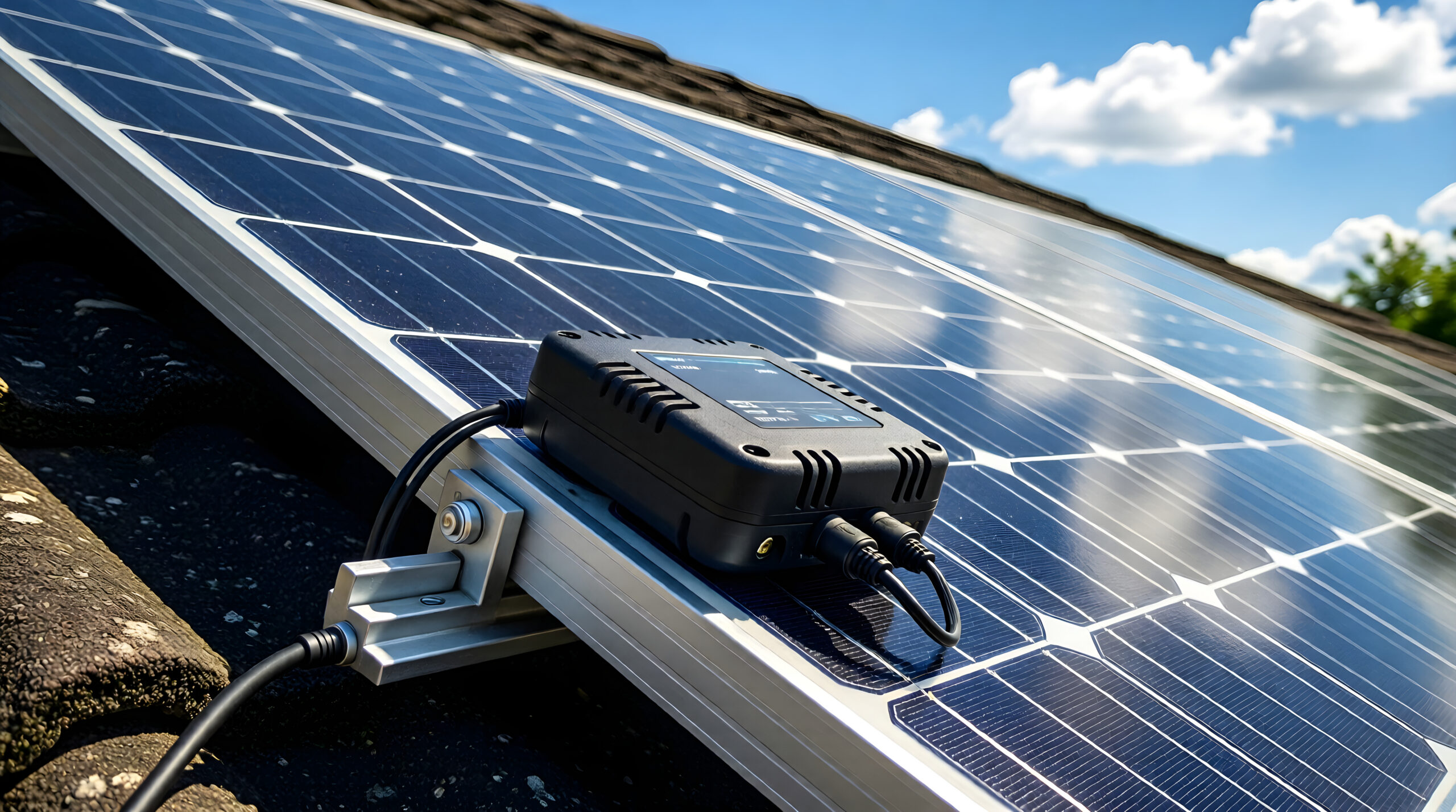
Microinverters convert DC-to-AC on the roof, at each panel.
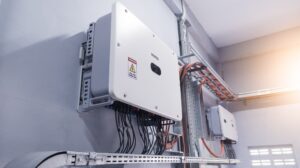
Optimizers condition DC power at each panel, then a central string inverter converts DC-to-AC near your main electrical panel.
Why this decision matters more under California’s current solar rules
California’s current structure rewards homeowners who can use more of their solar energy at home (especially after the sun goes down) rather than sending excess power back to the grid. That’s why a solar design that’s “battery-ready” (or battery-included from day one) is often the best path to stronger savings and a faster payback.
Your inverter architecture affects how cleanly the system integrates with storage, how flexible expansions are, and how serviceable it will be 10–25 years from now—right when you’re likely adding more load (second EV, heat pump HVAC, induction cooking, or a pool).
Microinverters vs. optimizers: side-by-side comparison
| Category | Microinverters | Optimizers + String Inverter |
| How power is converted | DC-to-AC at each panel (module-level inversion) | DC optimized per panel, then DC-to-AC at one central inverter |
| Shade / multiple roof planes | Excellent (each panel operates independently) | Excellent (panel-level MPPT via optimizers) |
| System-level single point of failure | No single inverter that can take the whole system offline | Yes: if the central inverter fails, production typically stops until it’s replaced |
| Monitoring granularity | Panel-level monitoring is standard | Panel-level monitoring is typical with optimizers |
| Typical warranty expectations | Often up to 25 years on microinverters (varies by manufacturer and activation) | Optimizers commonly 25 years; string inverter warranty commonly shorter, but often extendable |
| Best fit | Complex roofs, partial shading, and homeowners who value maximum fault-tolerance | Large, clean roof faces; homeowners prioritizing a central service point and potential cost efficiency |
Note: Warranty terms vary by model and program. For example, some microinverter systems in the U.S. advertise up to a 25-year limited warranty on microinverters, while optimizer-based systems may offer long optimizer warranties with a shorter base inverter warranty (often extendable). Always confirm the exact coverage in your proposal and manufacturer documents.
How to choose: a homeowner-friendly decision checklist
Step 1: Map shade and roof complexity (not just “sunny vs not sunny”)
In the Tri-Valley and East Bay, shade often comes from afternoon tree lines, chimneys, and neighboring roofs—not forests. If you have multiple roof planes (east/west split, dormers) or any recurring shade, both microinverters and optimizers can help because they manage production at the panel level rather than letting one weak panel drag down the whole array.
Step 2: Decide how you want failures handled over 10–25 years
Microinverter architectures avoid a single central inverter that can stop production for the whole home. Optimizer systems rely on a central inverter; it can be very reliable, but if it ever goes down, the system usually waits for service. This isn’t about fear—it’s about choosing the operational model you prefer.
Step 3: Plan your “future loads” now (EV, heat pump, workshop circuits)
A lot of Bay Area homeowners add a Level 2 EV charger within a year of going solar—or they already have one. Your solar design should anticipate your home’s electrical capacity needs. Sometimes, the best solar ROI is unlocked by the not-so-glamorous work first: main panel upgrades or sub-panel upgrades to safely support solar, batteries, and EV charging.
Step 4: Make “battery-first” part of the design conversation
Under the current California framework, batteries can increase the value of your solar by shifting your stored solar energy to the evening hours—when rates are often higher and your home is actually using power (cooking, HVAC, EV charging). Battery readiness also matters if your goal includes resilience during outages.
Where a smart panel fits (and when it’s worth it)
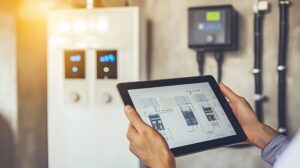
If you’re adding solar + battery and you care about control, a smart panel upgrade can be a game-changer. Instead of guessing which circuits will run during an outage, a smart panel can help you prioritize loads (refrigerator, internet, lights) and limit heavy loads when you’re on backup power.
For many Dublin homes, the smart-panel conversation becomes especially relevant when the existing main panel is crowded, undersized, or not designed for modern two-way power flows from solar + storage.
Helpful next steps on your site: SPAN smart panel upgrades, main panel upgrades, and sub-panel upgrades.
Local Bay Area angle: what we commonly see in Dublin, Pleasanton, San Ramon, Livermore, and Fremont
Across Alameda and Contra Costa County neighborhoods, roof layouts vary widely—two-story homes with multiple planes, garages set back from the main roofline, and “perfect on paper” south faces that still get late-day shade from mature trees. That’s exactly where module-level electronics (microinverters or optimizers) shine.
The other recurring theme: homeowners are electrifying. EV charging demand is rising, and many families are planning for a second EV. If your panel is already near capacity, an EV charger installation may require a load calculation, dedicated breaker space, and sometimes a service upgrade—especially if you want to charge at higher amperage while running HVAC and appliances comfortably.
If you’re in the South Bay as well, these same principles apply in San Jose where energy usage patterns (evening loads, summer cooling, EV charging) often push homeowners toward solar + storage planning from the start.
Explore local service pages: Dublin, Pleasanton, Fremont, Castro Valley, and San Jose.
A quick “battery value” framework (without the hype)
When batteries tend to pencil out better
- You use a lot of energy after 4–5 pm (cooking, cooling, laundry, home office).
- You want resilience (keep essentials running during outages).
- You have (or will soon have) an EV and want to manage charging more intelligently.
- You want a clearer path to future electrification without “starting over” later.
If you’re actively comparing system designs, it helps to ask one specific question: “How much of my solar will I self-consume vs export?” A battery typically boosts self-consumption by storing daytime production for evening use—where the savings can be more meaningful.
Learn more here: home battery backup solutions and solar panel installation.
Ready for a clear recommendation for your roof and your goals?
Sunlight Electri-Cal Solutions can help you compare microinverters vs. optimizers with real design constraints in mind: roof planes and shade, electrical panel capacity, battery sizing, and EV charging plans—so you get a system that’s efficient now and scalable later.
Request a Consultation Get a Free Estimate
FAQ: Microinverters vs. optimizers in the Bay Area
On a clean, unshaded roof, both can perform extremely well. On roofs with shade, multiple orientations, or mismatch between panels, both architectures help because they manage output at the module level instead of letting one low-performing panel reduce the whole string.
It depends on the system design, roof space, and electrical constraints. Microinverter systems are often straightforward to add onto panel-by-panel, while optimizer systems can be very expandable too—so long as the central inverter and design rules support the added capacity. The right answer is usually found in the engineering details (breaker space, interconnection limits, and equipment sizing).
Yes—both can be designed with battery storage. What matters most is choosing a battery strategy that aligns with your goals: maximizing evening self-consumption, backing up essential circuits, or supporting whole-home backup (which may require more storage and more electrical work).
Not always, but it’s common in older or fully-loaded panels. If you’re adding solar, a battery, and a Level 2 EV charger, a panel or sub-panel upgrade can be the cleanest way to keep everything code-compliant and avoid nuisance tripping or capacity bottlenecks.
Glossary
Microinverter: A small inverter mounted near each solar panel that converts DC electricity from that panel into AC electricity for your home.
Power optimizer: A module-level device that improves and controls a panel’s DC output, typically paired with a central string inverter for DC-to-AC conversion.
String inverter: A single inverter (usually near your electrical panel) that converts DC power from a “string” of panels into AC for your home.
MPPT (Maximum Power Point Tracking): Control logic that helps solar equipment operate panels at their best output as sunlight and temperature change.
Self-consumption: The portion of solar energy you generate and use directly in your home (or store in a battery) instead of exporting it to the grid.