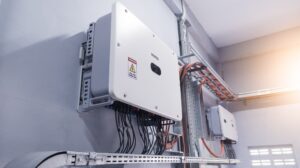


What to expect between “installed” and “turned on”
For homeowners in Dublin and the East Bay, one of the most confusing parts of going solar isn’t choosing panels—it’s the PG&E interconnection process. Interconnection is the utility’s safety and billing approval that allows your solar (and battery, if included) to operate in parallel with the grid. Until PG&E issues Permission to Operate (PTO), your system should remain off—even if the install is complete and the city inspection has passed.
Why PG&E interconnection matters (and why it can feel slow)
Interconnection exists for two practical reasons:
Safety: PG&E needs to confirm your equipment can safely synchronize with the grid and shut down correctly when required (utility line work, outages, emergencies).
Billing setup: Your account must be configured for solar billing, and your meter must measure both delivered energy and exported energy.
Timelines vary. PG&E notes that once it receives completed documentation from a contractor, PTO is typically issued in about 5–10 business days (with a stated maximum of 30 business days), but completeness and project specifics can change what “typical” looks like.
The PG&E solar interconnection process (clear steps)
Below is the homeowner-friendly view of how projects usually move from design to PTO.
Step 1) Confirm the customer of record & property details
PG&E’s interconnection review includes verifying that the system is tied to the right account and that the customer of record matches the property arrangement (owned/leased/rented). If anything is mismatched, it can trigger a back-and-forth that slows down the review.
Step 2) Submit the interconnection application (usually in the Your Projects portal)
Most residential solar interconnection requests are submitted through PG&E’s online interconnection tools/portal (commonly referred to as the Your Projects portal).
Pro tip for timing: PG&E advises submitting the single-line diagram (SLD) as early as possible—even before the system is built—so engineers can flag issues before they become field rework.
Step 3) Utility review: completeness, engineering, and Rule 21 checks
PG&E’s interconnection process is governed by California’s Rule 21 framework (for CPUC-jurisdictional interconnections). In simple terms: PG&E checks that the project meets technical and safety requirements and that the application package is complete.
If the application is missing required information, PG&E can deem it incomplete and request corrections—this is one of the most common causes of avoidable delay.
Step 4) Install, then pass your city/county final inspection
In Dublin, your solar and electrical work must pass the Authority Having Jurisdiction (AHJ) inspection (typically city building/electrical). This proves the system was installed to code and matches the permitted plans. Your contractor then uses the signed final to support PTO. (Your exact paperwork varies by project and scope.)
Step 5) Metering & any required utility inspection (if applicable)
Many homes won’t need an on-site PG&E inspection, but some projects are selected for inspection, and some customers may need metering work depending on their existing meter. PG&E notes that customers without a smart meter will need an inspection to install a NEM meter before PTO.
[removed section 6]
How to prevent delays: a contractor-quality checklist for homeowners
Even when your installer handles the paperwork, these are the items worth confirming (because they’re frequent “stall points”):
1) Single-line diagram (SLD) submitted early
PG&E explicitly recommends submitting the SLD as soon as possible, even before construction, to avoid late engineering changes.
2) Customer email included for faster PTO delivery
PG&E’s contractor guidance recommends including both contractor and customer emails to speed up delivery of the PTO letter.
3) Permit final signed and ready when requested
PTO often hinges on clean, signed final inspection documentation. Ask for a copy for your records and confirm it’s been uploaded/submitted.
[Removed #4 & Did you Know section]
.
Where solar + battery fits the “energy independence” goal in PG&E territory
In California, many homeowners are choosing solar with battery storage for a straightforward reason: controlling how and when you use your own energy. A battery can help you:
Run essential circuits during outages (when designed as backup).
Reduce how much you buy from the grid during expensive hours by shifting your own solar energy into evening use.
Keep critical devices powered (network gear, refrigeration, medical equipment, etc.)—depending on your backup design.
Under California’s current net billing framework for new solar customers (often discussed under the CPUC’s Net Billing Tariff), exported energy is credited differently than traditional net energy metering, which makes self-consumption strategies (and storage) more relevant to many households.
At-a-glance table: who does what?
| Milestone | Homeowner | Contractor (Sunlight Electri-Cal Solutions) | PG&E |
| Pre-design info | Provide bill history & goals | Site survey, design, plan set | — |
| Interconnection application | Authorize contractor (if needed) | Submit app + SLD; manage resubmittals | Review per Rule 21; request corrections |
| Install & AHJ inspection | Provide access; review system orientation | Perform install; coordinate inspection | — |
| PTO | Wait to energize until PTO | Submit final docs; assist with commissioning | Issue written authorization (PTO) |
Local angle: East Bay homes (panels, panels, and EVs)
In Dublin and nearby East Bay neighborhoods, it’s common to combine solar with at least one additional electrical upgrade:
Main/sub-panel upgrades: Helpful when adding solar, a battery, and/or a Level 2 EV charger—especially if your panel is full or undersized for new loads.
EV charger installation: A dedicated circuit and correctly sized breaker/wiring keep charging fast and safe.
Servicing an existing solar array: If your system isn’t producing as it used to, the issue may be inverter-related, wiring-related, or monitoring-related.
Sunlight Electri-Cal Solutions handles solar and electrical work in-house, which helps keep the design, permitting, and interconnection package aligned with how the system is actually installed.
Helpful service pages:
Residential Solar Panel Installation in Dublin, CA
Home Battery Backup Solutions (Solar + Battery)
Main Panel Upgrades | Sub-Panel Upgrades
Servicing of Existing Solar Panels
Want a smoother PG&E PTO experience?
If you’re planning solar, a battery backup, an EV charger, or a panel upgrade in Dublin, Sunlight Electri-Cal Solutions can help you design the system and keep the interconnection package clean and complete—so you spend less time waiting and more time using your own power.
Request a Quote / Schedule a Call
Prefer to start with questions? Visit our Solar FAQ.
FAQ: PG&E solar interconnection (homeowner questions)
How long does PG&E take to issue PTO?
PG&E states that once it receives completed documentation from a contractor, PTO typically takes about 5–10 business days in the off peak season (with a stated maximum of 30+ business days during its peak season). Missing documents or corrections can extend the timeline.
[Removed Question right after the above paragraph]
What documents usually cause delays?
Incomplete interconnection requests are a big one—missing or inaccurate single-line diagrams, mismatched equipment details, or missing required supporting documents can lead to deficiency notices and resubmittals.
Do most projects require a PG&E on-site inspection?
Many do not, but PG&E notes some projects are selected for inspection, and certain meter situations (such as lacking a smart meter) can require an inspection for meter installation before PTO.
How does solar billing work now in California?
Traditional NEM tariffs are closed to new enrollments; new customers are generally served under a net billing approach where exports are credited differently than the retail rate. Your best next step is to model your usage and consider storage if your goal is maximizing self-consumption and resilience.
Glossary (plain-English definitions)
Interconnection
The utility approval process that confirms your solar/battery system can safely connect and operate with the grid and be billed correctly.
PTO (Permission to Operate)
The written authorization from PG&E that allows you to turn on your system and operate in parallel with the grid.
SLD (Single-Line Diagram)
A simplified electrical diagram that shows how solar, inverters, batteries, disconnects, and service equipment connect. It’s a core document in interconnection review.
Rule 21
California’s interconnection framework that governs how customer generation (like rooftop solar and many storage projects) interconnects to investor-owned utility distribution systems.
Net Billing Tariff (often discussed as “NEM 3”)
The current framework for most new California residential solar customers, where exported energy is credited based on a set methodology rather than full retail-rate netting.
Sunlight Electri-Cal Solutions proudly services Dublin, San Jose, Castro Valley, Fremont, Pleasanton, and surrounding communities throughout the region.